Sefer Yetzirah

Aryah Kaplan

Sefer Yetzirah: The Book of Creation

Sefer Yetzirah ("Book of Formation" or "Book of Creation") is one of the earliest and most influential works of Jewish mysticism. Though its exact date and authorship remain uncertain, scholars generally place its composition between the 3rd and 6th centuries CE, with later revisions and commentaries expanding its influence.

It presents a unique cosmological vision in which God creates and sustains the universe through the powers of numbers, letters, and speech. It became a foundational source for later Kabbalistic thought and inspired centuries of mystical, philosophical, and esoteric interpretation.

Key Teachings

The Thirty-Two Paths of Wisdom

The book teaches that creation unfolds through 32 Paths of Wisdom, consisting of:

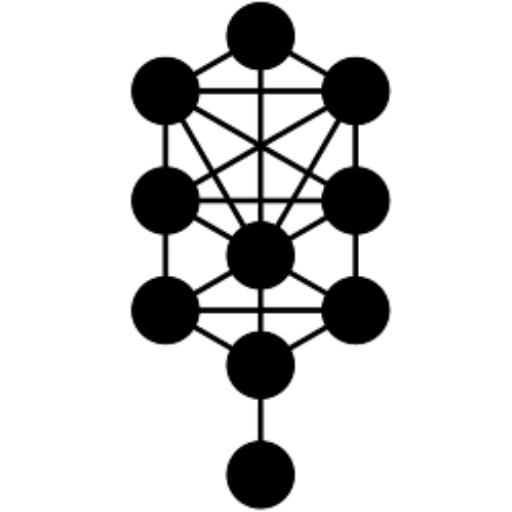
  • 10 Sefirot (fundamental emanations or dimensions of divine reality)
  • 22 Letters of the Hebrew Alphabet

Together, these form the building blocks through which the cosmos is structured and understood.

The Ten Sefirot

In Sefer Yetzirah, the sefirot are not yet described in the elaborate manner found in later Kabbalah. Instead, they are portrayed as abstract principles or dimensions that establish order within creation.

These ten sefirot are often associated with:

  • Space and direction
  • Time and cycles
  • The relationship between the finite and the infinite

The Twenty-Two Hebrew Letters

The Hebrew letters are treated as creative forces rather than merely symbols of language. See also the Rose of Creation. The text divides them into three categories:

Category Number Examples
Mother Letters 3 Aleph, Mem, Shin
Double Letters 7 Bet (ב) Gimel (ג) Dalet (ד) Kaf (כ) Pei (פ) Resh (ר) Tav (ת)
Simple Letters 12 Remaining letters

Each group is linked to aspects of creation, including elements, planets, months, and human faculties.


Cosmology

According to Sefer Yetzirah, the universe emerges through combinations and permutations of the Hebrew letters. Just as words are formed from letters, all created things arise from divine speech and order.

The text draws connections between:

  • The cosmos (macrocosm)
  • The human being (microcosm)
  • Language and consciousness
  • Time, space, and spirituality

This interconnected worldview became a central theme in later Kabbalistic traditions.


Influence on Kabbalah

Although relatively short, Sefer Yetzirah had a profound impact on Jewish mystical thought.

Its influence can be seen in:

  • Medieval Kabbalah
  • Mystical meditation practices
  • The development of sefirotic symbolism
  • Philosophical discussions of creation and language

Major Jewish thinkers and mystics wrote extensive commentaries on the text, each interpreting its symbolism through different theological and philosophical lenses.


Structure

Most versions of Sefer Yetzirah contain six chapters covering:

  1. The ten sefirot
  2. The three mother letters
  3. The seven double letters
  4. The twelve simple letters
  5. Cosmic correspondences
  6. The harmony between humanity and the universe

Because multiple manuscript traditions exist, chapter divisions and wording vary among editions.


Legacy

Today, Sefer Yetzirah remains one of the most studied works in Jewish mysticism. Its compact yet enigmatic language continues to inspire scholars, religious practitioners, philosophers, and students of esoteric traditions.

Its enduring significance lies in its attempt to answer some of humanity’s oldest questions:

  • How was the universe created?
  • What is the relationship between language and reality?
  • How do the divine, the cosmos, and the human soul connect?

For these reasons, Sefer Yetzirah occupies a unique place at the intersection of spirituality, philosophy, and mystical cosmology.