Tzimtzum: Contraction
Tzimtzum (צמצום), meaning "contraction," "withdrawal," or "constriction," is one of the most influential and profound concepts in Kabbalah. It describes the mysterious process by which the Infinite Divine, Ein Sof ("Without End"), made possible the existence of a finite universe.
The Divine Contraction That Made Creation Possible
According to Kabbalistic tradition, before creation there was only the Infinite Light of God. Since the Divine was infinite and all-encompassing, a fundamental question arose:
How can anything exist apart from an infinite God?
The doctrine of Tzimtzum offers a mystical answer. It teaches that the Infinite concealed or contracted its boundless light, creating a realm in which finite beings and creation could emerge.

Infinite Light
The Infinite, boundless Divine light filling all existence. Nothing else can be.
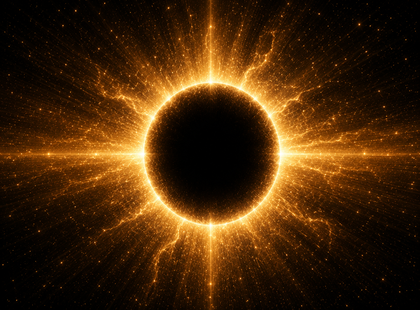
TzimTzum
Contraction
The Divine Light withdraws inward, contracting to allow space for creation.


The Ray of Light
A single ray of Divine Light enters the empty space – the beginning of manifestation.
What Does Tzimtzum Mean?
The Hebrew word Tzimtzum comes from a root meaning to contract, concentrate, or withdraw.
In Kabbalah, Tzimtzum refers to the Divine act of self-concealment that made space for creation. It is not generally understood as God physically moving or becoming less infinite. Rather, it describes a change in how the Divine presence is revealed.
Through Tzimtzum:
- The Infinite remains infinite.
- God remains present everywhere.
- Yet finite beings can experience themselves as existing independently.
This paradox lies at the heart of Jewish mysticism.
Why Was Tzimtzum Necessary?
If the Infinite Light of Ein Sof filled all reality without concealment, nothing distinct from God could exist.
The Kabbalists therefore taught that creation required a form of Divine self-limitation.
Tzimtzum explains how:
- Finite existence becomes possible.
- Individuality and free will can emerge.
- Human beings can develop a relationship with God.
- The physical and spiritual worlds can exist.
Without concealment, there would be only the Infinite.
The Lurianic Teaching of Tzimtzum
The doctrine of Tzimtzum is most closely associated with the sixteenth-century Kabbalist Isaac Luria
According to the teachings of the Ari:
- There was only the Infinite Light of Ein Sof.
- The Divine "contracted" its light.
- A symbolic empty space was formed.
- Into this space a ray of Divine light entered.
- The worlds and the sefirot came into existence.
This process became one of the foundational teachings of Lurianic Kabbalah and profoundly influenced later Jewish mysticism.
Was God Really Absent After Tzimtzum?
Most Kabbalists answer no.
The apparent "empty space" or Makom Panui created by Tzimtzum is not truly devoid of God. The Divine remains present everywhere, continuously sustaining all existence.
Many teachers interpret Tzimtzum as:
- A concealment of Divine revelation.
- A limitation of perception.
- A veil that allows creation to experience itself as separate.
In this understanding, God never actually departs. Rather, the Infinite becomes hidden.
Literal and Symbolic Interpretations
Throughout Jewish history, scholars have debated how Tzimtzum should be understood.
Literal Interpretation
Many later Kabbalists and Hasidic masters viewed Tzimtzum symbolically, teaching that:
- God remains fully present everywhere.
- The contraction occurs only from the perspective of creation.
- Separation from God is ultimately an illusion created by concealment.
This interpretation became highly influential in Hasidic thought.
Tzimtzum and the Sefirot
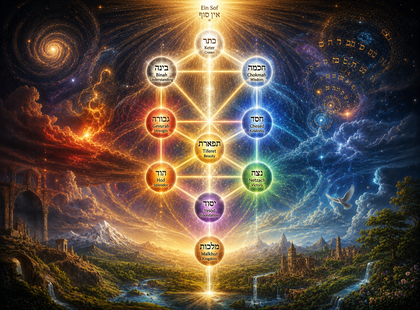
Following the concealment of Divine light, the process of creation unfolds through the ten sefirot, the channels through which Divine energy flows into the universe.
The sefirot serve as intermediaries between:
Through these emanations, the Infinite becomes knowable without ceasing to transcend all existence.
Tzimtzum and the Shattering of the Vessels
In Lurianic Kabbalah, Tzimtzum is followed by another profound event known as the Shevirat ha-Kelim, or Shattering of the Vessels.
According to this teaching:
- Divine light entered spiritual vessels.
- Some vessels could not contain the intensity of the light.
- They shattered, scattering sparks of holiness throughout creation.
This event explains:
- Imperfection in the world.
- The existence of suffering and evil.
- Humanity’s spiritual mission to restore and elevate these scattered sparks.
Tikkun: Repairing Creation
The process of restoring the scattered Divine sparks is known as Tikkun, meaning repair or restoration.
Through:
- Prayer
- Good deeds
- Torah study
- Acts of kindness
- Spiritual awareness
Human beings participate in the healing and rectification of creation.
Tzimtzum therefore is not only a teaching about the beginning of the universe; it also provides a framework for understanding humanity’s purpose within it.
The Spiritual Meaning of Tzimtzum
Many Jewish mystics see Tzimtzum as a model for spiritual life.
Just as God "made space" for creation, human beings can learn to:
- Make space for others.
- Practice humility.
- Restrain the ego.
- Create room for love and compassion.
- Allow the Divine presence to emerge within their lives.
In this sense, Tzimtzum becomes both a cosmological principle and a spiritual practice.
Tzimtzum and Human Free Will
The concealment of the Divine is also what makes genuine choice possible.
If God’s presence were completely revealed at all times:
- Doubt would disappear.
- Moral struggle would vanish.
- Freedom of choice would be greatly diminished.
The hiddenness created through Tzimtzum allows humanity to:
- Seek God freely.
- Grow spiritually.
- Choose goodness and holiness.
Common Questions About Tzimtzum
Did God Actually Leave Creation?
Most Kabbalists say no. God remains fully present, though hidden.
Is Tzimtzum a Scientific Theory?
No. Tzimtzum is a mystical and theological concept that explains the relationship between the Infinite and the finite.
Why Is Tzimtzum Important?
It provides a framework for understanding:
- Creation
- Human freedom
- Divine hiddenness
- Evil and suffering
- Humanity’s role in repairing the world
The Enduring Mystery of Tzimtzum
Tzimtzum is one of the most beautiful and challenging teachings in Kabbalah. It attempts to explain how an infinite and boundless God can create a world of finite beings while remaining fully present within it.
The doctrine teaches that creation itself is an act of Divine generosity and self-concealment. Through this hiddenness, human beings are given the opportunity to seek the Divine, exercise free will, and participate in the ongoing restoration of the world.
In contemplating Tzimtzum, the seeker encounters one of Kabbalah’s deepest insights: that the Infinite is not absent from creation but lovingly hidden within it, inviting every soul to rediscover its source in the boundless light of Ein Sof.