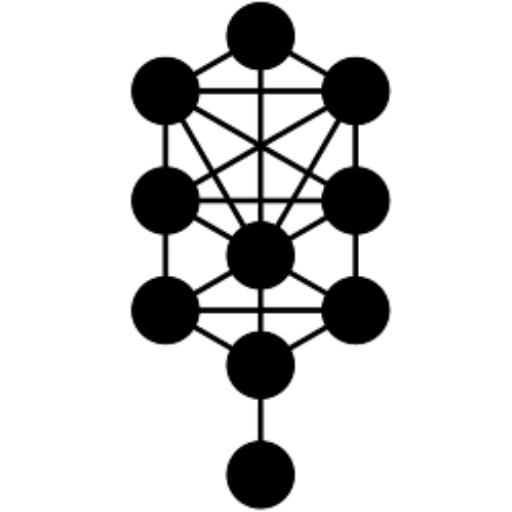
Chassidut (חסידות): Hasidism
Hasidism by Baal Shem Tov
Chassidut (or Chassidus) is a Jewish spiritual revival movement and philosophy founded in 18th-century Eastern Europe by Rabbi Yisrael Ba’al Shem Tov. It aimed to awaken the inner soul of the Jewish people and emphasizes serving God with joy, inner devotion (devekut), love for one’s fellow, and finding divinity in everyday life, making profound Kabbalistic concepts accessible to all Jews, not just scholars.
It transforms abstract mystical concepts into practical, experiential, and joyful approaches to serving God. While Kabbalah acts as a technical map of spiritual worlds (vessels), Chassidut focuses on the inward “light” and personal connection, making Divine service accessible to everyone, not just scholars.
Aspects of Chassidut and Kabbalah:
- Definition: Kabbalah is generally defined as the technical, often hidden, structural understanding of Divinity and creation, famously codified by Isaac Luria.
- The Shift: Chassidut, founded by the Baal Shem Tov in the 18th century, brought Kabbalistic concepts down to earth, emphasizing devekut (cleaving to God) in everyday life.
- Core Approach: While classical Kabbalah can focus on fear and trembling, Chassidut focuses on serving God with joy, love, and emotional connection.
- Soul vs. Body: If Kabbalah is the “soul” of Torah, Chassidut is considered the “soul of the soul,” interpreting metaphysical concepts to change human consciousness.
- Focus on Inner Life: Chassidut deals with the “lights” (orot) that fill the “vessels” (kelim) of Creation.
Relationship Between Them:
- Chassidut as Application: Chassidut uses the vocabulary of Kabbalah (Sefirot, Worlds) to explain how to develop love and fear of God, transforming intellectual understanding into emotional experience.
- Accessibility: Chassidut makes the lofty, sometimes opaque, concepts of Kabbalah relevant and actionable, often using stories and parables to convey deep, mystical truths.
- Modern Context: Many Chassidic movements, particularly Chabad-Lubavitch, place a major emphasis on studying Chassidut as a prerequisite to understanding the world through a divine lens.For further reading, consider exploring the works of the Baal Shem Tov for the foundations of Chassidut, and the writings of Isaac Luria (the Ari) to explore the depths of classical Kabbalah.
This article needs additional citations for verification. (October 2017) |
Hasidic philosophy or Hasidism (Hebrew: חסידות), alternatively transliterated as Hasidut or Chassidus, consists of the teachings of the Hasidic movement, which are the teachings of the Hasidic rebbes, often in the form of commentary on the Torah (the Five books of Moses) and Kabbalah (Jewish mysticism). Hasidism deals with a range of spiritual concepts such as God, the soul, and the Torah, dealing with esoteric matters but often making them understandable, applicable and finding practical expressions.
With the spread of Hasidism throughout Ukraine, Galicia, Poland, and Russia, divergent schools emerged within Hasidism. Most if not all schools of Hasidic Judaism stress the central role of the Tzadik, or spiritual and communal leader, in the life of the individual
Etymologically, the term, hasid is a title used for various pious individuals and by various Jewish groups since biblical times, and an earlier movement, the Hasidei Ashkenaz of medieval Germany was also called by this name. Today, the terms hasidut and hasid generally connote Hasidic philosophy and the followers of the Hasidic movement.