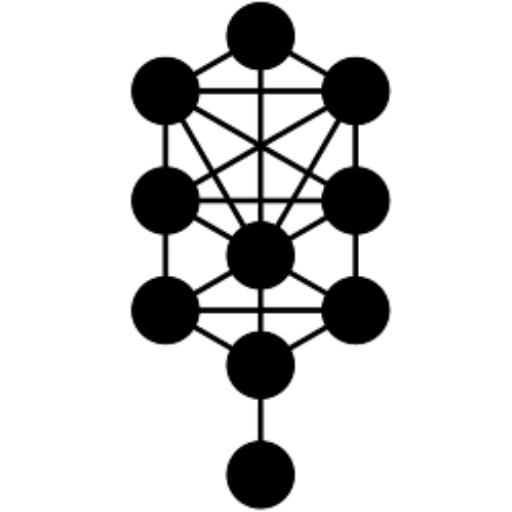
Tetragrammaton (יהוה): YHWH
The name of G-d.
This should not be pronounced but read as “Adonai” (אֲדֹנָי) My Lords, (Pluralis majestatis taken as singular), or, if the previous or next word already was Adonai, as “Elohim” (אֱלֹהִים) God.
The four letters of the Tetragrammaton and the Four Worlds: the י is associated with Atziluth, the first ה with Beri’ah, the ו with Yetzirah, and final ה with Assiah.

The Tetragrammaton is the four-letter Hebrew-language theonym יהוה (transliterated as YHWH), the name of God in the Hebrew Bible. The four Hebrew letters, written and read from right to left, are yod, he, vav, and he. The name may be derived from a verb that means ‘to be’, ‘to exist’, ‘to cause to become’, or ‘to come to pass’.

While there is no consensus about the structure and etymology of the name, the form Yahweh (with niqqud: יַהוֶה) is now almost universally accepted among Biblical and Semitic linguistics scholars, though the vocalization Jehovah continues to have wide usage, especially in Christian traditions. In modernity, Christianity is the only Abrahamic religion in which the Tetragrammaton is freely and openly pronounced.
The books of the Torah and the rest of the Hebrew Bible except Esther, Ecclesiastes, and (with a possible instance of יה (Jah) in verse 8:6) the Song of Songs contain this Hebrew name.
Observant Jews and those who follow Talmudic Jewish traditions do not pronounce יהוה nor do they read aloud proposed transcription forms such as Yahweh or Yehovah; instead they replace it with a different term, whether in addressing or referring to the God of Israel. Common substitutions in Hebrew are אֲדֹנָי (Adonai, lit. transl. ’My Lords’, pluralis majestatis taken as singular) or אֱלֹהִים (Elohim, literally ‘gods’ but treated as singular when meaning “God”) in prayer, or הַשֵּׁם (HaShem, ‘The Name’) in everyday speech.
English
Noun
tetragrammaton (plural tetragrammata or tetragrammatons)
- Alternative letter-case form of Tetragrammaton.