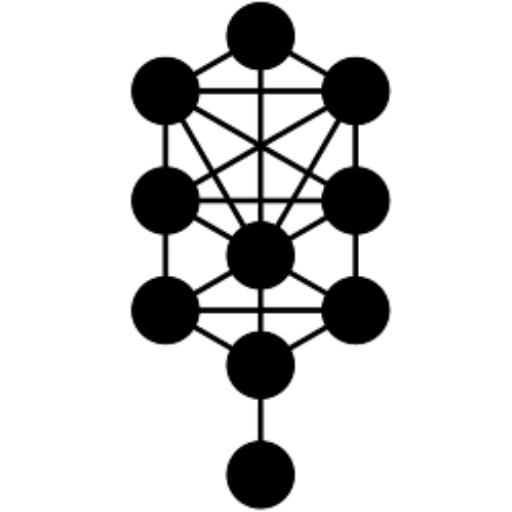
Eitz Chaim (עץ חיים): Tree of Life.
Tree of Life and Lurianic structure.
The most well known diagram of Lurianic Kabbalah. The structured framework of the tree is comprised of the Sephirot emanations and paths.
A common term used in Judaism, used in Genesis 2:9, referring to the Tree of Life in the Garden of Eden. It is also found in the Book of Proverbs, where it is figuratively applied to “wisdom” Proverbs 3:18, “the fruit of a righteous man” Proverbs 11:30, “a desire fulfilled” Proverbs 13:12, and “healing tongue” Proverbs 15:4.


The tree of life is a fundamental archetype in many of the world’s mythological, religious, and philosophical traditions. It is closely related to the concept of the sacred tree. The tree of the knowledge of good and evil and the tree of life which appear in Genesis‘ Garden of Eden as part of the Jewish cosmology of creation, and the tree of knowledge connecting to heaven and the underworld such as Yggdrasil, are forms of the world tree or cosmic tree, and are portrayed in various religions and philosophies as the same tree.
Scholars differ on whether it was Egypt or Mesopotamia who was the originator of the motif, or that it was a “meta-metaphor” which arose in different cultures.