Ehyeh Asher Ehyeh (אֶהְיֶה אֲשֶׁר אֶהְיֶה): I Will Be What I Will Be
The name of God associated with Keter
This is the name given to Moses at the burning bush when he asks how to refer to who sent him to the people. Ehyeh Asher Ehyeh represents absolute, boundless divine consciousness, the unknowable essence of existence, and the dynamic process of continual becoming.
Meaning & Translation
While traditionally translated in standard Bibles as “I Am that I Am” (Exodus 3:14), a Kabbalist might emphasize the future and dynamic tenses of the Hebrew root word hayah (to be).
The Translation: It translates mystically to “I Will Be what I will be,” “I will become,” or “I am becoming”.
The Significance: It suggests that the Divine is not a static object but an eternal unfolding process of creation and perpetual motion.
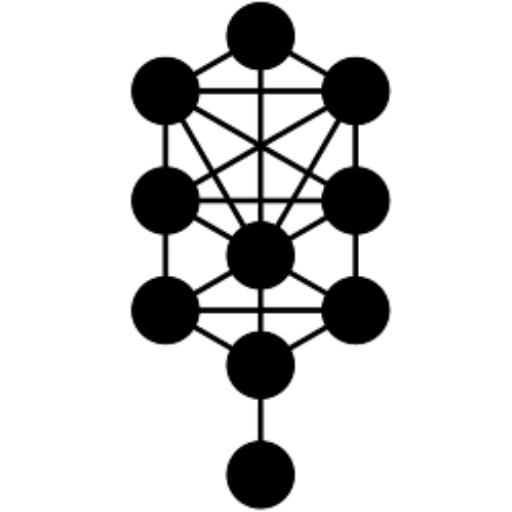
Connection to Keter
In Kabbalistic teachings, Keter sits at the very top of the Tree of Life. It is so transcendent that it borders on Ayin, which translates to “nothingness” or “no-thingness”. Because Keter is beyond human comprehension and distinct forms, God’s nature is revealed as the pure, open-ended potential of “I will be”. It represents a state of limitless compassion, equanimity, and boundless light before it condenses into defined attributes, thoughts, or physical reality.
The Divine Name in Practice
Kabbalistic meditation on the names of God is a way to channel specific spiritual energies.
Meditative Focus: The name “Ehyeh” (I will be) is used to invoke divine mercy, continuous renewal, and the ability to release rigid, limiting concepts about yourself or the universe.
Transcendent Being: It acts as a reminder that both the universe and the human soul are in a constant state of spiritual evolution and manifestation.

“I Am that I Am” is a common English translation of the Hebrew phrase אֶהְיֶה אֲשֶׁר אֶהְיֶה (’ehye ’ăšer ’ehye; pronounced [ʔehˈje ʔaˈʃer ʔehˈje]), which appears in the Hebrew Bible (book of Exodus 3:14). The phrase is also translated as “I am that (I) am“, “I will become what I choose to become“, “I am what I am“, “I will be what I will be“, “I create what(ever) I create“, or “I am the Existing One“.