Keter (כתר): Crown
The first Sephirot.
Keter embodies the primal stirrings of intent in the infinite Ein Soph and desire to bring the world into being. It has no content yet contains all the potential for creation. Thus is it called “Nothing” and “The Hidden Light”.
The Partzufim.
Associated with two partzufim or divine personas: Arik Anpin (אריך אנפין) and Atik Yomin (עתיק יומין). In the symbolic family hierarchy, Atik Yomin is the great-grandfather, and Arik Anpin is the grandfather. Together, these partzufim reflect Keter’s dual nature as both an all-encompassing force and a deeply concealed, primordial essence.
Related Name of God.
The name of God associated with Keter is “Ehyeh Asher Ehyeh” (אהיה אשר אהיה), as per the name revealed to Moses from the burning bush.
Keter, although being the highest sefirah of its world, receives from the sefirah of Malkuth of the domain above it. The uppermost Keter sits below no other sefirah, although it is below Ohr Ein Sof, the source of all Sefirot.
Keter or Kether (Hebrew: כֶּתֶר, romanized: Keṯer, lit. ‘crown‘; ⓘ) is the first of the ten sefirot in the Kabbalistic Tree of Life, symbolizing the divine will and the initial impulse towards creation from the Ein Sof, or infinite source. It represents pure consciousness and transcends human understanding, often referred to as “Nothing” or the “Hidden Light”. Keter is associated with the divine name “Ehyeh Asher Ehyeh” (אֶהְיֶה אֲשֶׁר אֶהְיֶה), meaning “I Am that I Am”, which was revealed to Moses from the burning bush, and it embodies the qualities of absolute compassion and humility. Its meaning is “crown”, and it is interpreted as both the “topmost” of the Sefirot and the “regal crown” thereof.
.jpg)
| The Sefirot in Kabbalah | ||
|---|---|---|

| ||

|
The Tree of Life | |

This article may incorporate text from a large language model, which is prohibited in Wikipedia articles. (October 2025) |
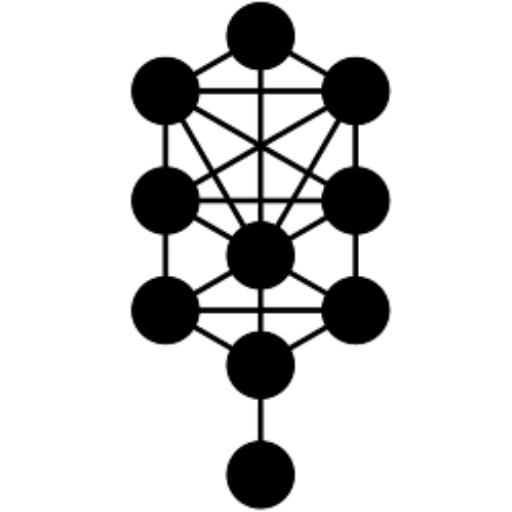
Keter is positioned at the top of the Tree of Life, sitting above and between Chokmah on the right and Binah on the left, and above Tiferet. It is often depicted with three primary paths: one leading to Chokmah, another to Binah, and the third to Tiferet. This positioning highlights its role as the source from which wisdom (Chokmah) and understanding (Binah) emanate, and it emphasizes its connection to beauty and harmony (Tiferet), thereby facilitating the flow of divine energy through the sefirot.
Keter is called in the Zohar “the most hidden of all hidden things”. Moses ben Jacob Cordovero describes Keter as the source of the Thirteen Attributes of Mercy, derived from a verse in the Book of Micah. These attributes emphasize compassion, forgiveness, and humility. Cordovero also outlines ethical behavior associated with Keter in his work The Palm Tree of Devorah, encouraging purity of thought and actions, such as always turning one’s ears to hear good and avoiding anger.
In Western esotericism, Keter is linked to the initial point of divine emanation, representing pure formless consciousness. It is associated with various divine and mystical figures, such as the archangel Metatron and the Tetramorph of the Holy Living Creatures.